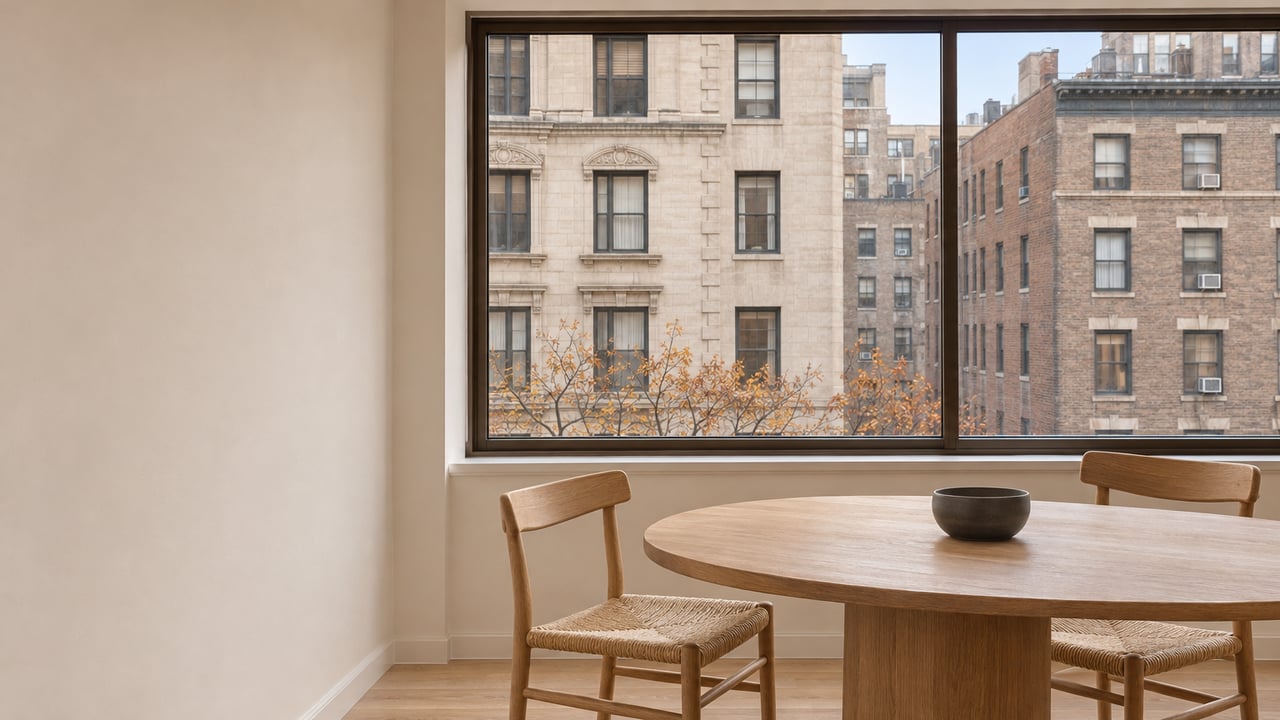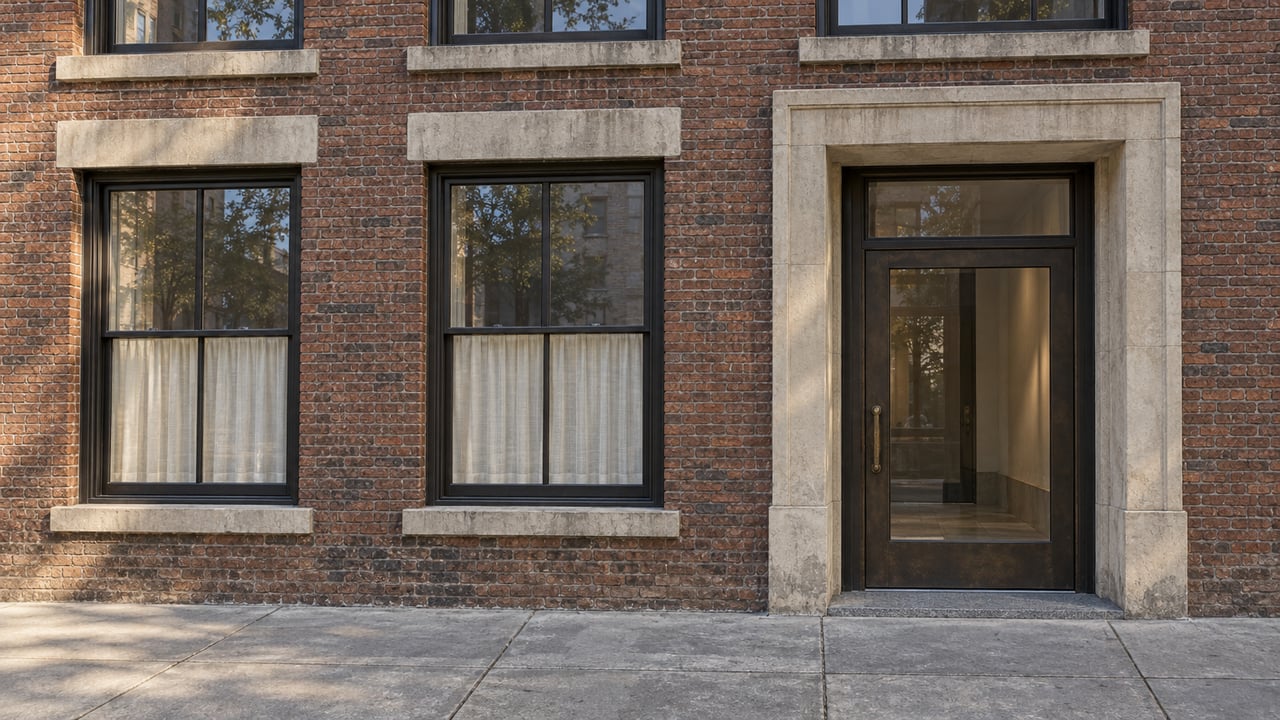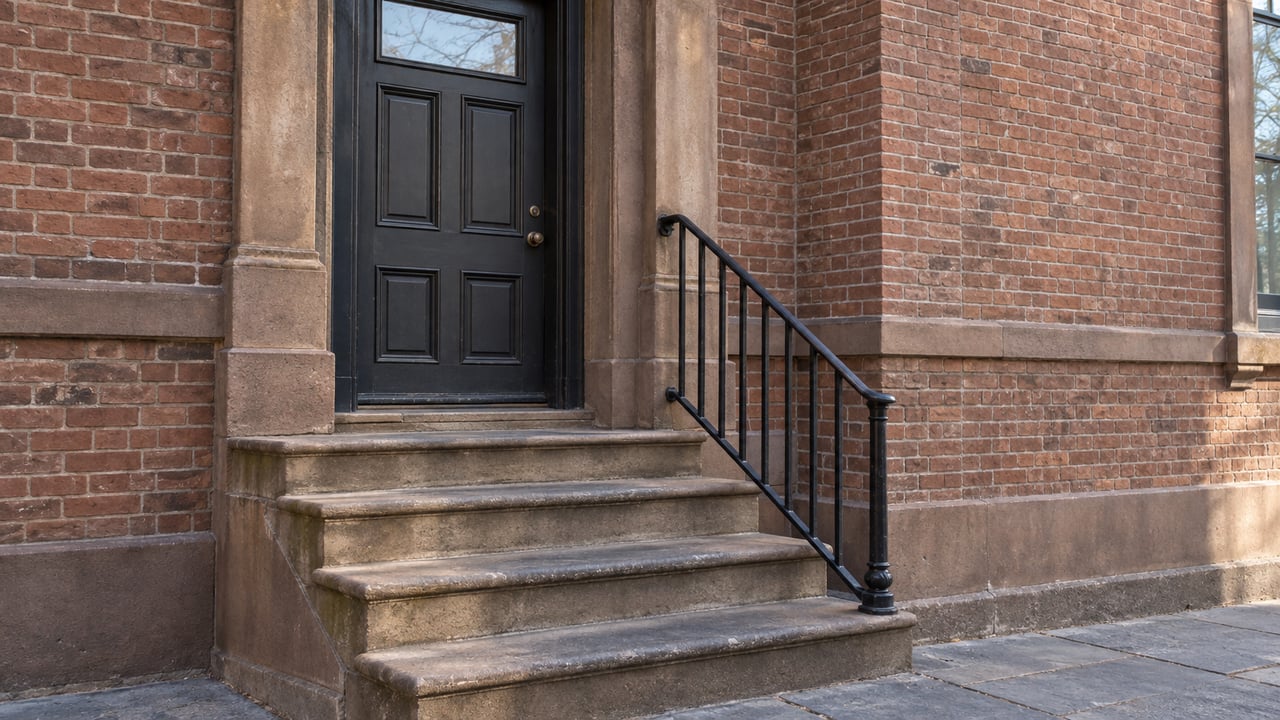
Walk down Sixth Avenue near West 4th Street this week and you might pass a dozen people trailing a guide past a row of prewar facades, necks craned upward. That's Marc Catapano's tour of the gargoyles, mascarons, and carved beasts still watching from the cornices of townhouses most people walk past without looking up. It's one stop on the Village Trip Festival, ten days of walks, talks, and concerts running September 25 through October 4 across Greenwich Village and the East Village, built around this year's theme, Revolutionary Voices. Come Halloween night, the same stretch of Sixth Avenue will hold something closer to a river of 50,000 people in costume. The distance between those two versions of the street isn't really a contrast. It's a timeline.
A Festival Small Enough To Get Postponed By Rain
The Village Trip runs on a scale that a single afternoon of bad weather can knock off course, and this year it has. Wild Women of The Village, a walking tour on the painters, poets, and photographers who shaped the neighborhood, got postponed. So did Eugene O'Neill and the Village. Meanwhile, Miles and Trane at 100, a centennial celebration led by multi-instrumentalist David Amram, sold out entirely. These are the kinds of details you only get from a festival that still runs like a neighborhood project rather than a tourism product: a dozen tickets, one guide, a room that can fill up or a walk that can get rained out.
Ann McDermott leads a walk tracing the folk clubs where Bob Dylan, Judy Collins, and Bruce Springsteen played before anyone outside downtown knew their names, starting at the corner of Mercer and West 4th Street. Catapano's other tour follows the Beatniks through the same blocks where Jack Kerouac and Jackson Pollock made their scene. None of this requires a stage larger than a sidewalk.
The festival's one big public moment lands Saturday, October 3, when its signature free concert takes over Gansevoort Plaza in the Meatpacking District for the first time. The Slambovian Circus of Dreams headlines, and the plaza's restaurants and bars will be doing steady business around the edges of the crowd. Jeffrey LeFrancois, executive director of the Meatpacking Business Improvement District, said hosting the show means "bringing its spirit of creativity, community and cultural exchange into the heart of the Meatpacking District." It's a bigger stage than a walking tour, but still one you could stand at the back of and hear every note.
The Same Neighborhood, Fifty-Two Years Earlier
None of this is new behavior for the West Village in October. In 1974, puppeteer Ralph Lee of the Mettawee River Theatre Company put together a small, homemade procession through his own West Village block, carrying puppets he'd built himself. There was no permit process worth mentioning, no marching bands, no subway advisories. It was a neighborhood artist doing exactly what the Village Trip's guides and performers are still doing this week: staging something creative on the same streets where they lived, at a scale their neighbors could actually walk alongside.
That procession is now the Village Halloween Parade, and on Saturday, October 31, it returns for its 53rd year with a scale Lee's original walk never touched. This year's parade opens with Firehorse, a new puppet commissioned from Basil Twist, a MacArthur "Genius" grant recipient, choreographed by performance artist Julie Atlas Muz and produced by Barbara Busackino of Tandem Otter Productions. It's still puppetry. It's just puppetry built for a route that runs from King Street north to West 15th along all of Sixth Avenue, with a 7 p.m. start and an 11 p.m. finish, and a lineup that begins at Canal Street between 6:30 and 9 p.m.
The parade never stopped being a piece of neighborhood culture. It just outgrew the block it started on, the same way any successful small idea eventually needs more room than its original street corner.
What That Growth Means For Your Own Block
The parade's most congested viewing stretch, according to both PIX11 and local reporting, sits between Bleecker Street and 14th Street. That's not a tourist corridor. That's the residential core of the West Village, which means for four hours on October 31, your own front stoop may double as a spectator section.
The practical adjustments are specific enough to plan around:
- The West 4th Street station, serving the A, B, C, D, E, F, and M lines, runs several exit-only and entrance-only doors at different points in the evening depending on crowd size.
- The Spring Street C/E station's northbound entrance typically goes exit-only during the parade's peak hours, generally in the window from 5 to 10 p.m.
- Parade lineup access at Canal Street and Sixth Avenue only opens from the east and south (Sullivan, East Broome, and Canal Streets) or, from the west, via Canal Street itself.
- Driving into or through the area after 6 p.m. is close to pointless. Every organizer and outlet covering the parade says the same thing: take the subway.
The city runs a seasonal program called Trick-or-Streets through the Department of Transportation, coordinating with local partners to open up car-free space around one of the year's busiest nights for foot traffic. The 2026 specifics for that program hadn't posted as of this writing, so it's worth checking the DOT's page again as the date gets closer.
The Twenty-Seven Days Between Them
Here's the part that actually matters if you live on these blocks rather than just visiting them once a year. The Village Trip closes October 4. The parade doesn't arrive until October 31. That's nearly four full weeks where Sixth Avenue goes back to being an ordinary avenue, gargoyles and folk-club history intact but no crowd control, no subway advisories, no reason to think twice about which door of the West 4th Street station you're using.
If you want to catch what's left of the festival, the walking tours and evening concerts are still running through this Sunday, and most of them are the kind of small, ticketed event where showing up is the only trick. If you're planning to be anywhere near Bleecker and 14th on Halloween night, the useful move is picking one spot early, whether that's the quieter tail end near 14th and 15th Streets or simply staying two blocks off Sixth Avenue entirely until the crowd clears after 11.
Both nights trace back to the same instinct: someone in this neighborhood decided the street itself was worth doing something with. One of them still fits on a single block. The other one needed all of Sixth Avenue and fifty-two years to get there.
If you're living between Bleecker and 14th and wondering how your own stretch of the West Village behaves the other 364 days of the year, that's the kind of question Stefani Berkin answers directly, block by block, corner by corner. Schedule a confidential consultation whenever the timing works for you.