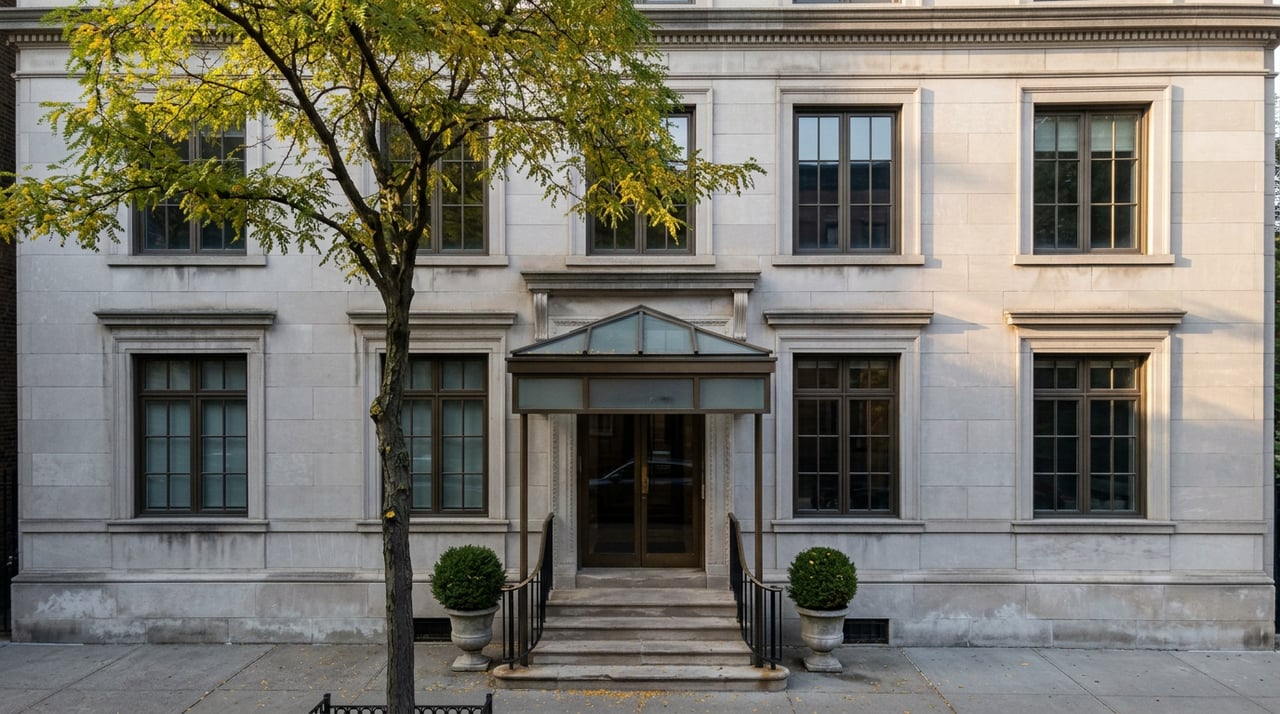
Walk west on 18th Street toward Tenth Avenue and you'll pass two buildings that a listing sheet would describe identically: both steps from the High Line, both in West Chelsea, both close enough to hear the park's evening foot traffic. But stand at the base of each and look up. One building's windows sit level with the elevated walkway, so a resident on the right floor can watch the park's plantings sway while making coffee. The other sits just below that line, and its lower units look at the underside of the structure rather than into it. Same block. Same walking distance. Very different apartment.
That difference is not a matter of taste. It is the actual mechanism behind Chelsea's most talked-about pricing story, and it explains why the neighborhood's headline numbers rarely tell buyers anything useful.
The Premium Lives at a Specific Height, Not a Specific Distance
The assumption most buyers bring to Chelsea is simple: get as close to the High Line as the budget allows. A peer-reviewed hedonic study of the park's phased openings in 2009, 2012, and 2014 found that homes closest to the High Line gained roughly 35 percent in value after it opened. That much confirms the folklore. What the same research found next is the part that changes how a buyer should actually shop: when the authors isolated elevation as its own variable, the largest share of that premium went specifically to homes sitting at the same height as the High Line's walkway, not simply to homes located nearby.
In practice, that means a fourth-floor unit half a block from the park can outperform a second-floor unit directly across the street from it. Distance gets you into the conversation. Elevation gets you the premium. A listing description that says "steps from the High Line" is making a claim about sidewalk geography. It is saying nothing about what a buyer will actually see from the couch.
Why Chelsea's Median Price Means Almost Nothing
This elevation effect helps explain something that trips up anyone comparing Chelsea to other Manhattan neighborhoods using a single median number. Chelsea's reported median swings wildly depending on which data provider you check and which month you catch it in, because the neighborhood is really two markets sharing one zip code.
As of May 2026, the median condo sale price in Chelsea was reported at $2.9 million, up 59 percent year over year. Over the three months ending in April 2026, a separate tracker put Chelsea's median price per square foot at $1,520, down nearly 12 percent from the year before. Both figures are accurate. Both are describing the same neighborhood in the same season. The gap exists because Chelsea's transaction volume is thin enough that whichever segment happens to close in a given window, prewar co-ops on one side of the neighborhood or starchitect towers on the other, can swing the average by tens of percentage points.
The corridor breakdown makes the split visible:
| Corridor | Typical price per square foot | Anchor buildings |
|---|---|---|
| West Chelsea, High Line frontage, west of Tenth Avenue | $2,800 to $4,500+ | One High Line, Lantern House, 520 West 28th, HL23 |
| East Chelsea, east of Ninth Avenue, prewar stock | $1,400 to $2,200 | Walker Tower, Chelsea Mercantile, London Terrace Gardens |
A buyer comparing "Chelsea" prices against another neighborhood's median is often comparing that neighborhood against half of Chelsea without realizing it. The other half is a different conversation entirely, with different buyers, different financing considerations, and a different relationship to the park that gives the corridor its name.
The Corridor's Newest Buildings Are Being Built Around This Exact Insight
Developers active in West Chelsea right now are not guessing about any of this. They are designing directly for the elevation effect rather than simply building near it.
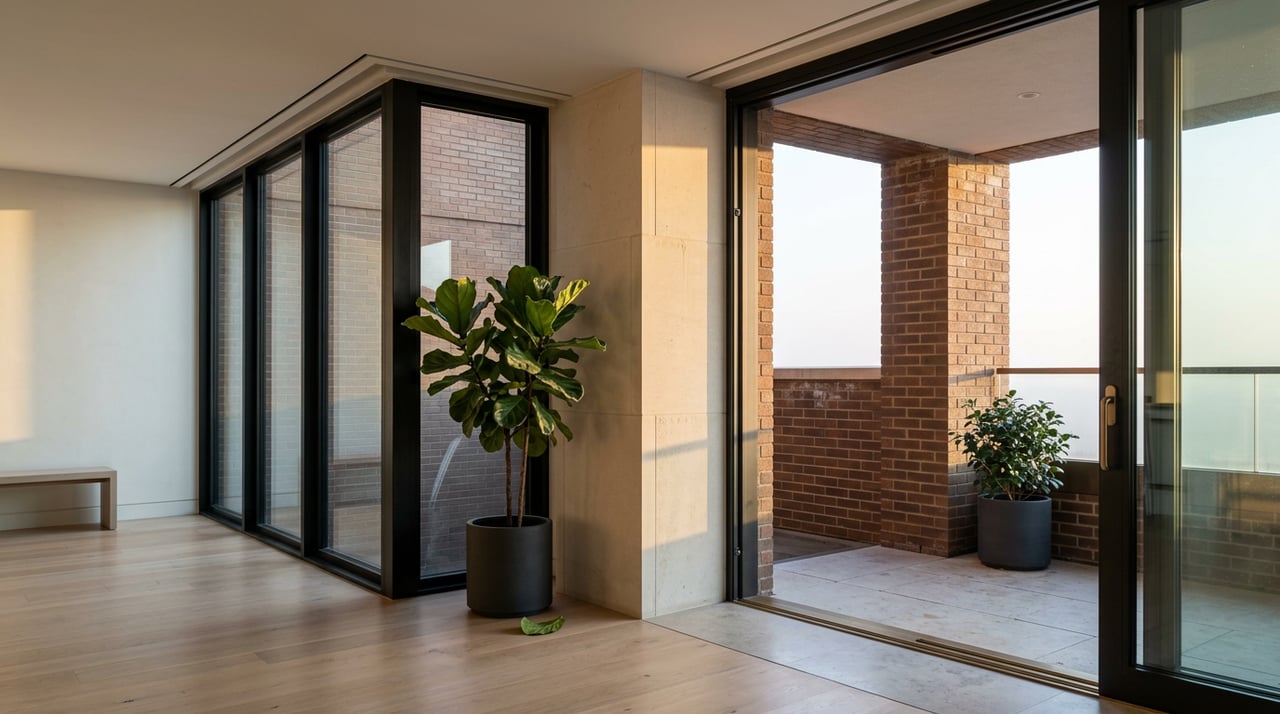
Legion Investment Group's 550 West 21st Street, which topped out in July 2026, sits on one of the last sizable undeveloped waterfront parcels in West Chelsea, positioned between Hudson River Park and the High Line. Rather than stacking uniform floors, the building steps back as it rises, carving private loggias and terraces into the upper stories specifically to open sightlines in three directions. More than 75 percent of its 83 residences will include private outdoor space, and roughly two-thirds are designed with direct Hudson River views, with glass railings used instead of solid parapets so the view corridor stays uninterrupted. Architect Thomas Juul-Hansen told Robb Report that his approach was less about competing with the neighborhood's glass towers and more about honoring what has actually lasted here, describing the buildings that have held up on the far West Side as brick, warehouse buildings, and designing 550 West 21st's Italian brick and limestone facade to sit alongside them rather than against them.
The land underneath these projects is scarce enough that developers are paying accordingly. Toll Brothers closed on 118 10th Avenue, one of the last mostly undeveloped parcels along the High Line's Tenth Avenue frontage, for $53 million, with plans for an 85,000-square-foot condominium directly across from One High Line and Lantern House. Chad Sinsheimer of Adirondack, who brokered the deal, put it plainly: sites like that simply don't come up often along the High Line. That scarcity is a structural reason the West Chelsea premium is unlikely to compress even as more buildings rise around the park, because the remaining parcels capable of capturing true elevation and sightline are running out.
What to Actually Check Before You Compare Two Listings
For a buyer trying to compare Chelsea options with any precision, walking distance to the park is close to useless as a filter. What matters is whether a specific unit's floor level puts its windows at, above, or below the High Line's own elevation, and whether anything between the building and the park, a neighboring structure, a rooftop mechanical box, breaks that sightline before it reaches the unit.
That is not something a floor plan alone will answer. It is worth asking for a cross-section of the building relative to the park's grade, and it is worth touring the specific floor in person rather than relying on a rendering, since the study's own finding was that the premium concentrated at a precise height, not a general neighborhood. Two units in the same building on different floors can sit on opposite sides of that line.
Frequently Asked Questions
Does every building near the High Line command the same premium? No. Two buildings at similar walking distance from the park can differ meaningfully in price per square foot depending on whether their units sit at the High Line's own elevation or below it.
Is East Chelsea a worse place to buy because it trades at a lower price per square foot? Not necessarily. East Chelsea's prewar co-ops and lofts, anchored by buildings like Walker Tower and Chelsea Mercantile, serve a different buyer entirely, one prioritizing classic layouts and established boards over new construction and park views.
Why do Chelsea's median price figures seem to contradict each other from one report to the next? Because Chelsea's total sales volume is thin enough that whichever corridor, East or West, happens to close more transactions in a given window can swing the reported median by double digits, even though nothing about the underlying market actually shifted.
Comparing two Chelsea listings on price per square foot alone will mislead you more often than it helps. The neighborhood rewards buyers who ask about height, sightline, and what's actually scarce along that stretch of the High Line, not just how many blocks away the elevator opens. If you're weighing a West Chelsea tower against an East Chelsea co-op, or trying to figure out what a specific unit's view is actually worth against its asking price, Stefani Berkin can walk the building with you before you make an offer on a number that might not mean what it looks like it means. Schedule a confidential consultation to talk through what you're actually comparing.