If you are searching for a home with real presence on the Upper East Side, a classic six likely keeps coming up for good reason. These apartments offer a layout that still feels elegant and practical, but buying one involves more than falling for high ceilings and original moldings. When you understand how the layout works, how blocks and avenues differ, and how co-op finances can shape your monthly costs, you can make a much smarter decision. Let’s dive in.
What a classic six actually is
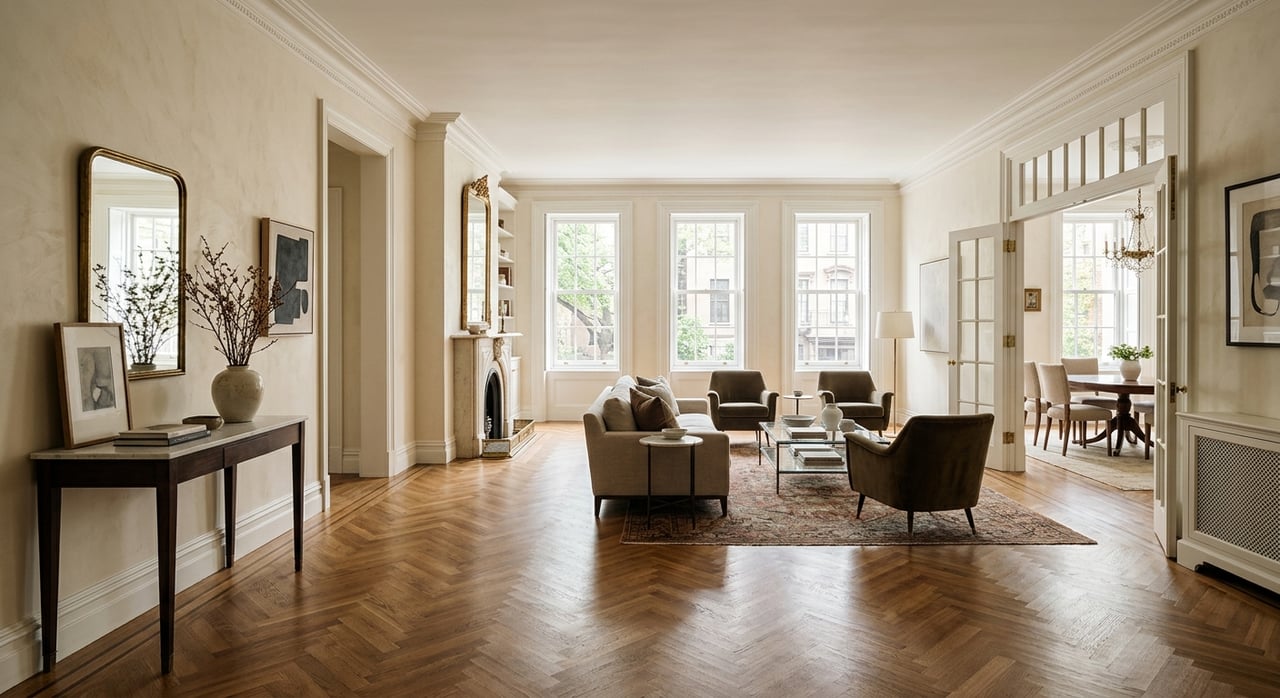
A classic six is a prewar apartment layout with six principal rooms. In most cases, that means a living room, formal dining room, kitchen, two bedrooms, and a smaller bedroom off the kitchen.
Bathrooms, closets, and pantries are not part of the six-room count. That is why a classic six is not a six-bedroom apartment, even though the name can sound that way at first.
These homes became popular in the 1920s and are commonly found in older Upper East Side buildings. Many have details buyers still love today, including oak floors, thick walls, spacious rooms, high ceilings, original moldings, and sometimes a wood-burning fireplace.
Why classic sixes still appeal
A classic six offers a layout with clear separation between entertaining space, private bedroom space, and service space. If you prefer distinct rooms over a more open-plan feel, this floor plan can feel both functional and timeless.
The formal dining room is one reason these homes stand out. It gives you flexibility for everyday meals, work-from-home use, or hosting, without taking over the living room or bedrooms.
The smaller room near the kitchen also adds options. Depending on the apartment and building rules, buyers often see it as useful space for guests, a home office, or household support needs.
Why the Upper East Side matters
The Upper East Side is one of the places where the classic six truly belongs. The neighborhood’s early 20th-century development helped shape the kind of prewar apartment buildings where these layouts are most often found today.
Historic records show that the area north of 59th Street and east of Central Park developed into a major residential address. Over time, different avenues took on different roles, and that still helps explain why two classic sixes with similar square footage can feel very different from one another.
On today’s market, avenue choice can affect building style, street feel, access, and pricing. That makes location analysis especially important when you are comparing Upper East Side options.
How avenue choice changes the experience
Not all Upper East Side classic sixes offer the same day-to-day lifestyle. A home near Fifth or Park may appeal to buyers focused on park proximity and a more formal setting.
Madison and Lexington often offer stronger retail presence and practical transit convenience. Third Avenue tends to feel busier, but it has seen meaningful street improvements, including a protected bike lane, bus lane, and pedestrian safety upgrades along a roughly 1.9-mile stretch from East 59th Street to 96th Street.
If two apartments look similar online, the avenue can be the deciding factor once you think about your routine. Your commute, shopping habits, museum access, and preferred street energy all matter just as much as the floor plan.
Look beyond the listing photos
Classic sixes photograph beautifully, especially when they retain original prewar character. But on the Upper East Side, the apartment itself is only part of the story.
You should also consider building type, light, street noise, access to transit, and nearby amenities. The neighborhood offers strong park access, subway access, and bike-lane coverage, which can make one block feel more convenient than another even within a short walking distance.
For buyers who value cultural access, the Upper East Side remains especially compelling. East Side subway access to 86th Street and the walk west toward Fifth Avenue help reinforce why many buyers prioritize proximity to parks, museums, and established corridors.
Most classic six buyers will face co-op rules
Many classic six apartments on the Upper East Side are in co-op buildings. Rentals exist, but they are less common, and many buyers in this segment are purchasing co-op shares rather than fee-simple real estate.
In a co-op, you buy shares in a corporation that are allocated to a specific apartment. In return, you receive a long-term proprietary lease tied to that home.
That structure affects how ownership works. Co-op boards are elected by shareholders, and they operate under bylaws, the proprietary lease, the certificate of incorporation, and house rules.
For you as a buyer, this means the apartment is never the only thing under review. You also need to understand the building’s sublet policies, governance, financial condition, and operating culture.
Monthly costs can surprise buyers
One of the biggest mistakes buyers make is focusing only on the asking price. With a classic six, the more important number may be the monthly carrying cost.
In a class 2 co-op, the property-tax bill is mailed to the board rather than to the individual owner. The board then allocates taxes through maintenance or common charges, which is one reason co-op monthly costs can feel less transparent to first-time buyers.
There is also a co-op and condo tax abatement that can reduce annual property taxes by 17.5% to 28.1%, depending on average assessed value. The managing agent or board must apply for that benefit each year.
You should also remember that current maintenance does not always tell the whole story. Planned increases, assessments, major capital repairs, and mortgage refinancing can materially change your costs.
Ask better financial questions
When you evaluate a classic six, go beyond asking, “What is the maintenance?” A better question is whether the building has deferred maintenance, major upcoming work, or a capital plan that could affect your budget.
That matters because expensive building-wide work can shift costs quickly. On older Upper East Side properties, big-ticket items may include facade work, roof repairs, elevator upgrades, plumbing, electrical systems, and boiler work.
A lower monthly charge is not always the better value if it means the building has postponed needed repairs. Sometimes the stronger choice is the building with clearer planning and more transparent financials.
What to review before you buy
New York State guidance is clear on this point: read the full offering plan and do not rely only on marketing materials or verbal assurances. If possible, ask the sponsor or seller in writing about known defects.
You should also review the latest financial report, including footnotes, and the last year of board minutes. Those documents often reveal repair history, planned capital projects, and issues that may not be obvious during a showing.
If the apartment is a resale from an individual owner rather than the sponsor, disclosure may be more limited. That makes document review even more important.
Smart due diligence checklist
- Confirm whether the apartment is a co-op or another ownership structure
- Review the building’s offering plan if available
- Read recent board minutes
- Review the latest financial statements and footnotes
- Ask about assessments, planned capital work, and refinancing
- Check sublet rules and other house rules that may affect your plans
- Confirm whether the building has a final Certificate of Occupancy or a Temporary Certificate of Occupancy
Why Certificate of Occupancy matters
The New York City Department of Buildings strongly recommends closing on a final Certificate of Occupancy rather than a Temporary Certificate of Occupancy. If a building still has a temporary one, buyers should consult a New York State licensed professional engineer or registered architect.
This is especially important when you are buying in an older Manhattan building with a long renovation history. It is one of those technical details that can be easy to overlook until late in the process.
Renovation plans need extra care
Many buyers consider updating kitchens, reworking the smaller staff room, or improving windows and finishes after closing. On the Upper East Side, those plans may involve more building and regulatory review than you expect.
In landmarked Upper East Side districts, most exterior changes require review by the Landmarks Preservation Commission. Ordinary exterior repairs, such as replacing broken glass or repainting to match existing conditions, generally do not.
If your plans touch windows, facades, or any exterior-adjacent element, make sure you understand both building requirements and landmark rules early. That can save time, cost, and frustration.
Don’t overlook address-specific school zoning
If school access matters to your household, treat it as an address-level question, not a neighborhood-level assumption. On the Upper East Side, school zoning depends on the exact address.
New York City notes that most families have a zoned elementary school, and many middle-school students attend zoned schools. Families can learn their zoned school or district by entering an address into the city’s school search tools or by calling 311.
For buyers comparing nearly identical classic sixes, this can be a meaningful difference. Two apartments a few blocks apart may not offer the same school options.
How to shop for the right classic six
The best classic six for you is not always the one with the most ornate details or the most famous avenue. It is the one that fits your budget, your daily routine, and your comfort level with the building’s rules and financial picture.
As you compare options, focus on three layers at once: the apartment, the building, and the block. That approach helps you see past surface charm and make a decision that works in real life.
A classic six on the Upper East Side can be a remarkable long-term home. With the right guidance and careful review, you can buy one with confidence and clarity.
If you are weighing classic six opportunities on the Upper East Side and want discreet, informed guidance through the search and due diligence process, Stefani Berkin can help you navigate the details with confidence.
FAQs
What does a classic six mean on the Upper East Side?
- A classic six usually means six principal rooms in a prewar layout: living room, formal dining room, kitchen, two bedrooms, and a smaller room off the kitchen.
Are Upper East Side classic six apartments usually co-ops?
- Many classic six apartments on the Upper East Side are in co-op buildings, which means board rules, maintenance charges, and sublet policies are important parts of the buying decision.
Why are monthly costs for a classic six sometimes high?
- Monthly costs can reflect property taxes allocated through the co-op, building operations, assessments, major repairs, and other financial obligations tied to an older building.
How should I compare Upper East Side avenues when buying a classic six?
- Fifth and Park often appeal for park proximity, Madison and Lexington for retail and transit convenience, and Third Avenue for a busier feel with strong bus and bike improvements.
What building documents should I review before buying a classic six co-op?
- You should review the offering plan if available, recent board minutes, the latest financial statements with footnotes, and any information about assessments, repairs, or planned capital work.
Does school zoning vary by Upper East Side classic six address?
- Yes. School zoning is address-specific, so two similar apartments on different blocks may have different school options.